Process service in Pennsylvania runs on a hidden clock, and most people never see it coming. They assume that once they file a complaint, the lawsuit simply waits until someone finds the defendant. Pennsylvania does not work that way. The moment you file a complaint, a 30-day timer starts running. If the papers do not reach the defendant in time, the process itself goes stale. The case does not vanish, but the plaintiff must formally revive it first. That single rule catches out-of-state attorneys and first-time filers again and again. It shapes how process service in Pennsylvania has to be planned from day one.
This guide explains the 30-day rule and the reinstatement fix. It covers who may actually serve, and the mistakes that quietly derail otherwise solid cases. It is general background, not legal advice. For anything specific to your matter, the Pennsylvania Rules of Civil Procedure and qualified counsel remain the right resources.
The 30-Day Rule Behind Process Service in Pennsylvania
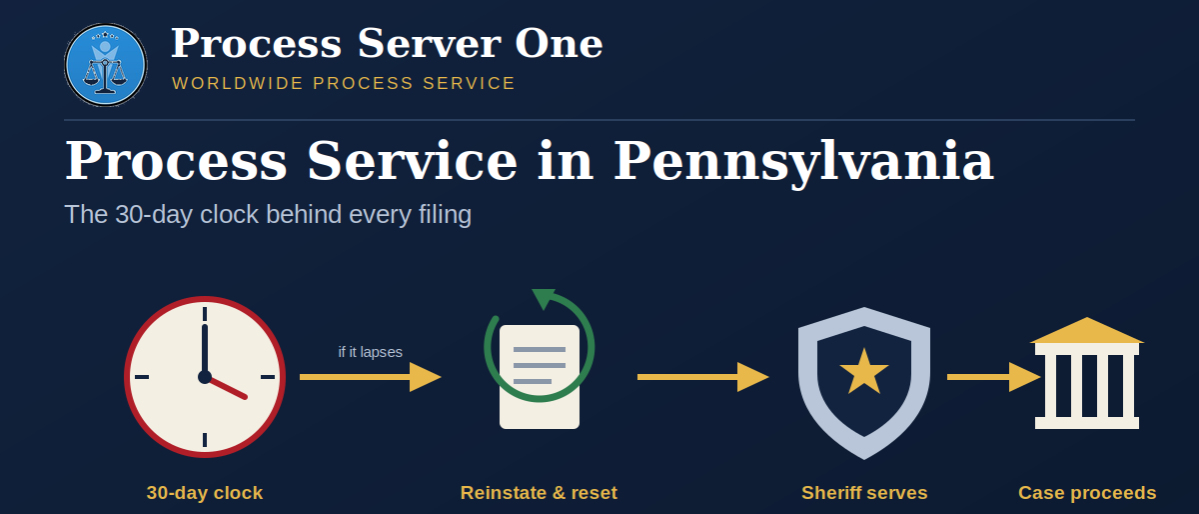
Under Pennsylvania Civil Rule 401, a plaintiff must serve original process within 30 days after filing the complaint or issuing the writ. That deadline applies when service happens inside the Commonwealth, and it is a short window. Thirty days sounds workable until an address turns out wrong, a defendant dodges the door, or the file sits on a desk during a busy stretch.
When the clock runs out, the papers lose their punch. The plaintiff cannot just keep trying to serve stale process. Instead, the state asks for a formal step to bring the case back to life, and only then can service resume. So the real skill here is not just serving fast. It is tracking that 30-day window and acting before it closes.
Reinstatement: The Fix Almost Nobody Plans For
Here is the part that saves cases. Rule 401 lets the plaintiff reinstate the complaint or reissue the writ. You simply file a short request with the prothonotary, which is Pennsylvania’s name for the court clerk. That step restarts a fresh 30-day period, and you can repeat it any number of times.
In practice, a careful plaintiff never truly loses the ability to serve. Someone just has to watch the calendar. This step also carries a quiet second benefit. It can save the original filing date for statute-of-limitations purposes when the effort to serve has been real. Miss the window and do nothing, though, and the case stalls. A seasoned server treats this as a routine tool, not an emergency, and files it the moment service looks likely to run long.
Who Handles Process Service in Pennsylvania, and Why the Sheriff Comes First
The state is stricter than most about who delivers the papers. Under Rule 400, the sheriff serves original process inside the state. A private server or any other adult is not the default. That catches people off guard when they come from states where anyone over 18 can serve.
There are real carve-outs, and they matter. A competent adult may serve original process in certain actions. Those include cases seeking an injunction, a split of property, or a declaratory judgment as the only relief. The same holds in cases built on complete diversity of citizenship. Family law matters follow their own track under a separate rule. And when a defendant sits in another county, the home sheriff usually has to deputize the local one to reach them. Knowing which lane a case falls into is exactly where experience pays off. Guess wrong, and you can void the service.
Where Private Servers Add Real Value to Process Service in Pennsylvania
If the sheriff handles so much, why hire a professional server at all? Because a great deal of process service in Pennsylvania falls outside that original-process box. Subpoenas, many post-complaint filings, and papers headed to out-of-state defendants often move faster and cleaner through a private server who does this every day.
Skip tracing is another reason. When a defendant’s address is stale, a sheriff will try the address on file and little more. A pro server can confirm a current address first, so the attempt actually lands. Verify the address, then route the papers through the right channel. That combination is what keeps a case here from losing weeks it does not have.
Common Mistakes With Process Service in Pennsylvania
A few errors show up over and over. One is assuming the 30-day clock does not really matter, then scrambling when it expires. Another is forgetting that reinstatement exists at all, so a plaintiff refiles or panics instead of taking one simple step.
A third slip is sending a private server to deliver original process in a case that by law needs the sheriff, which can undo the whole effort. Then there is the sloppy return of service. A proof that is missing dates, a clear note on the attempt, or the right server’s signature invites a challenge later. Good records of every attempt, and a clear read on which method the case needs, are what turn a shaky service into a solid one.
How Process Server One Handles Pennsylvania Cases
Process Server One works these matters with the calendar front and center. The team tracks the 30-day window and flags the reinstatement step before a deadline slips. It routes each paper through the right channel, too. That can mean working with the sheriff on original process, or serving subpoenas and follow-up papers directly. Address checks come first, so no attempt is wasted on an old address.
The team also keeps a detailed record of every attempt for a clean return. And it sends status updates, so an attorney never has to guess where a service stands. For matters that reach beyond Pennsylvania, it coordinates service across state lines and around the world. That helps when a defendant has moved or the plaintiff is filing from another state. None of this guarantees a signature from someone determined to hide, but it keeps the process professional, documented, and moving.
Why Attorneys Choose Process Server One
Law firms, in-house counsel, and self-represented filers turn to Process Server One for Pennsylvania. The team understands the pieces that trip others up. Familiarity with the 30-day rule, the reinstatement fix, and the sheriff-first structure keeps a case from stalling on a technicality. The result is fewer surprises, cleaner returns, and service that holds up when opposing counsel questions it.
Working with people who serve papers in this state every week tends to keep a matter moving toward a result. It keeps the case off the filing desk for a costly second try.
Conclusion
Process service in Pennsylvania is really a race against a 30-day clock, backed by a reinstatement safety net that too few people use. Add the sheriff-first rule and its carve-outs, and it becomes clear why local know-how pays off. Track the window, reinstate before it closes, and match each document to the right server, and the rest of the case has room to breathe.
Need Pennsylvania service handled before the clock runs out? Request a Pennsylvania process server now or call (855) 545-1303 to talk through your matter.
FAQs
1. How long do I have to serve original process in Pennsylvania? Under Rule 401, you generally must serve original process within 30 days of filing the complaint or issuing the writ, when service happens inside the Commonwealth.
2. What happens if I miss the 30-day deadline? The process goes stale, but you can reinstate the complaint or reissue the writ through the prothonotary, which starts a fresh 30-day period. You can do this any number of times.
3. Does the sheriff have to serve the papers in Pennsylvania? For original process inside the state, the sheriff serves by default under Rule 400. Certain actions and family law matters allow a competent adult or private server instead.
4. Can a private process server help at all? Yes. Private servers commonly handle subpoenas, post-complaint filings, out-of-state defendants, and address verification, and they coordinate around the sheriff where original process requires it.
5. Why is reinstatement so useful? It revives stale process without losing momentum, and a genuine effort to serve can help preserve the original filing date for statute-of-limitations purposes.
6. Does Process Server One handle out-of-state and international defendants? Yes. The team coordinates service beyond Pennsylvania and internationally, which helps when a defendant has moved or the matter crosses borders.